Why isn't anyone panicking?
The S&P 500 is near all-time highs. Crypto is up. And yet the US has started its biggest Middle East war since Iraq, and 20% of the world’s oil just went offline. Why is most everybody pretending things are normal?
The conflict is massive
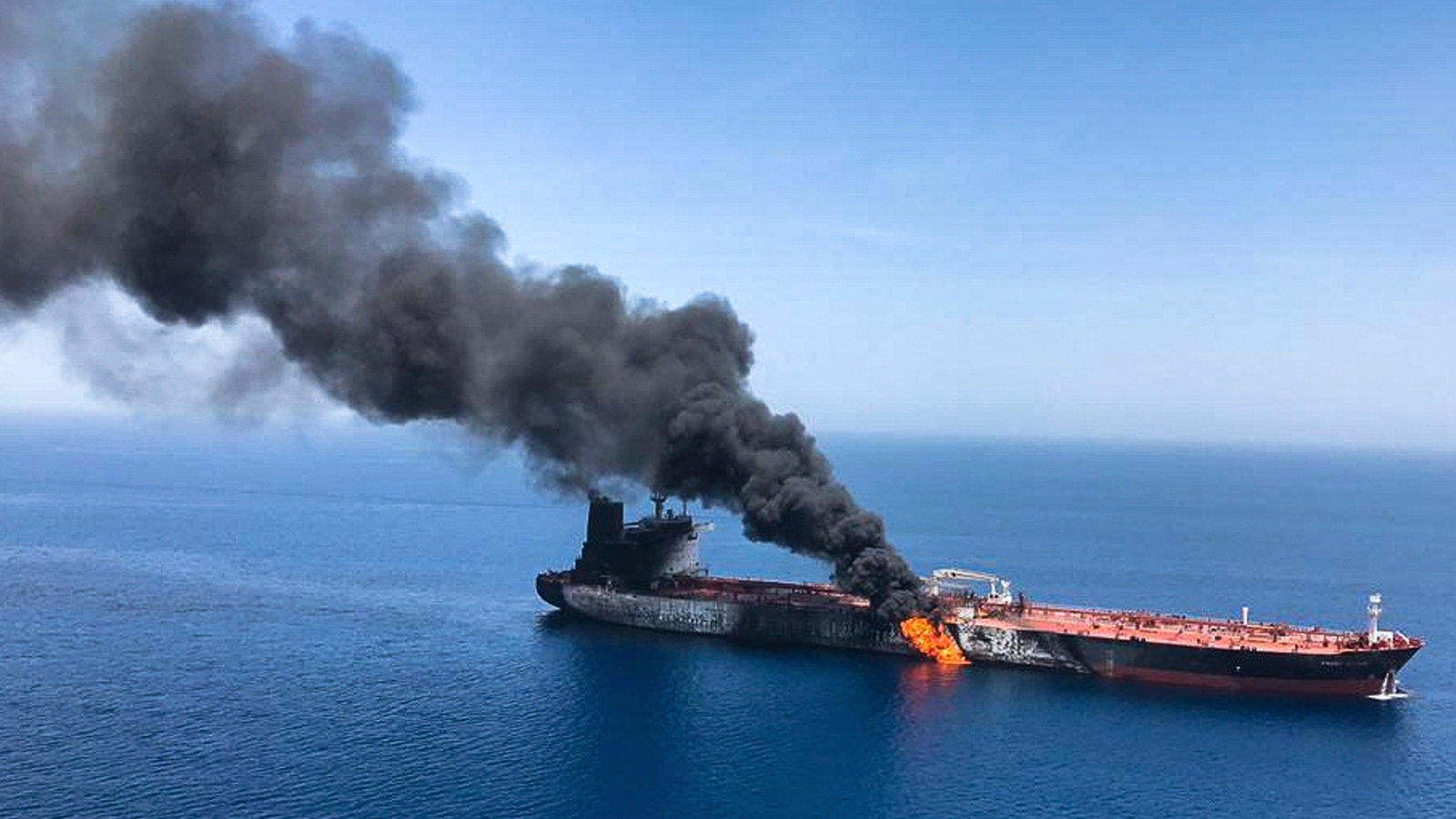
The official communications are chaotic about the goals of the military operation. There is no clear off-ramp in sight, and the conflict keeps escalating. Tankers are not going through the Strait of Hormuz, taking roughly 20% of the world’s oil out of the market.
The White House, and its supporters claim that as soon as they decide to wrap this up, the strait will open up again and everything would be normal. Alternatively, they argue that by using more military action, involving even more countries in the conflict, they can open it back up now. However, oil experts and academics are widely sceptical of this and traffic is in standstill.
The fear is that even if Iran is militarily fully defeated, the threat of a single cheap drone by a holdout militia is enough to raise insurance prices, or even cancel covers. Ships are so expensive that no rational commercial operator could risk it. And this doesn’t count for loss of life, or crews refusing to go to the region.
As oil prices shot up, shipping companies have no incentive to operate in the conflict zone, as they can charge a lot more for their ships even if they have to cover longer distances outside of the strait. The risk of a vessel getting stuck inside the Persian Gulf is already enough to stay away, even if not a single mine or drone is actually there. Analysts are claiming naval escorts are not a solution either, and even if they were, how unsustainable that’d be both economically and politically.
Rumors are that Russia and China are helping Iran with intelligence, giving us all Cold War PTSD.
Why there’s no end in sight
The world has now learnt1 that with these asymmetric war tactics, Iran is more of a threat to the global economy than previously thought. They barely have an army at this point, but they still have excessive leverage in the world oil supply.
The region is highly destabilized, gulf states that spent billions of dollars building airports, airlines, and their reputation of a luxury link between the East and the West are now getting an unbelievable setback. They are a couple of bad escalations away to get their refineries, ports and wells offline for months if they get hit by a drone or a missile. And should bombs fully stop tomorrow, we have all seen that oil from this part of the world is riskier than we priced in, so alternatives and redundancies need to get built, increasing costs of the supply chain for everyone.
So far, the Houthis have not shown up in the playfield, but if they were to, disruptions could cause commercial vessels to avoid the Red Sea, complicating oil transit even more. And the US went into this with only half of their strategic oil reserves available.
All of this happens while Ukraine is not meaningfully producing oil, and Russian oil is largely sanctioned by the West. Russian tankers are getting seized every week, and even blown up at sea. Meanwhile the flagship growth driver, AI, is incredibly capital intensive.
Short term economic impact
A narrative I see often is that because the US is a net exporter of oil and gas, they won’t get hurt from this and could actually even benefit. This argument is flawed. Oil markets are international, so higher prices elsewhere cause people to bid more locally for export. Oil companies, in the US and elsewhere, would benefit from this, but prices at the pump will undoubtedly go up, and with them most prices of the economy. Of course, oil production can be ramped up outside of the Persian Gulf, but if it wasn’t already being produced, it’s because it’s more costly than the oil supply the world has lost.
It’s obvious from there the impact this would have on margins and cashflows and the overall economy, so one could expect valuations to go down sharply and prompt rate hikes globally, similarly to what we saw in 2022 right after Russia invaded Ukraine.
What Trump could do
The only short-term tool Trump has to manage cost of living in the US is to restrict oil exports. But that would hurt big oil the most, so I doubt that’s a route the president would take. However, his administration has a very protectionist approach with the economy with its flagship import tariffs. The most likely scenario I can picture is he will just push retailers in the US to lower price at the pump, maybe even a little cosmetic tax cut.
So why aren’t markets reacting?
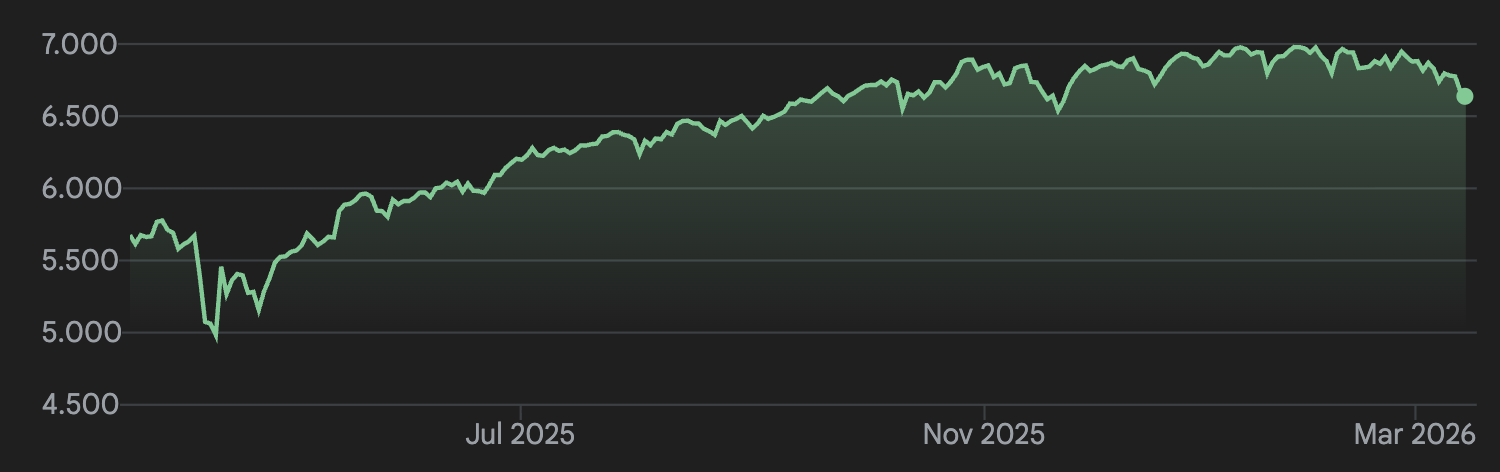
So the question remains, why is the market not pricing this in? Why aren’t companies taking preventive measures for the oil shock we will very likely get?
Not even crypto, one of the most speculative asset classes, has taken a dive, in fact some coins have been up since the beginning of the war. I would expect to see a similar sell-off like the one we saw when Russia invaded Ukraine in 2022, that started one of the steepest rate hikes and market caps destruction.
Time will tell if Wall Street is right and this is not really a big deal, or it is experiencing a delusion. For the short term, I’m personally taking some profits and waiting in cash 2.
Authored by Martín Volpe