What happens when your blog post hits #1 in Hacker News?
Some weeks ago my post “How the AI bubble bursts” reached #1 in Hacker News and stayed there for about 3 hours, plus 1 hour on the front page until it ultimately dropped. This came as a total surprise, I expected to get 4 points, like my previous post.
It was certainly an emotional rollercoaster to get that validation from a community I’ve been following since I first got to the internet. It was also hard to not make this my whole personality. It’s crazy to think that, for 4 hours, my writing was the most-read thing in Silicon Valley, that people I admire, from companies I admire, even maybe a billionaire, read my article and got an idea out of my post. It’s almost certain that at least someone from a major AI lab read it.
The aftermath
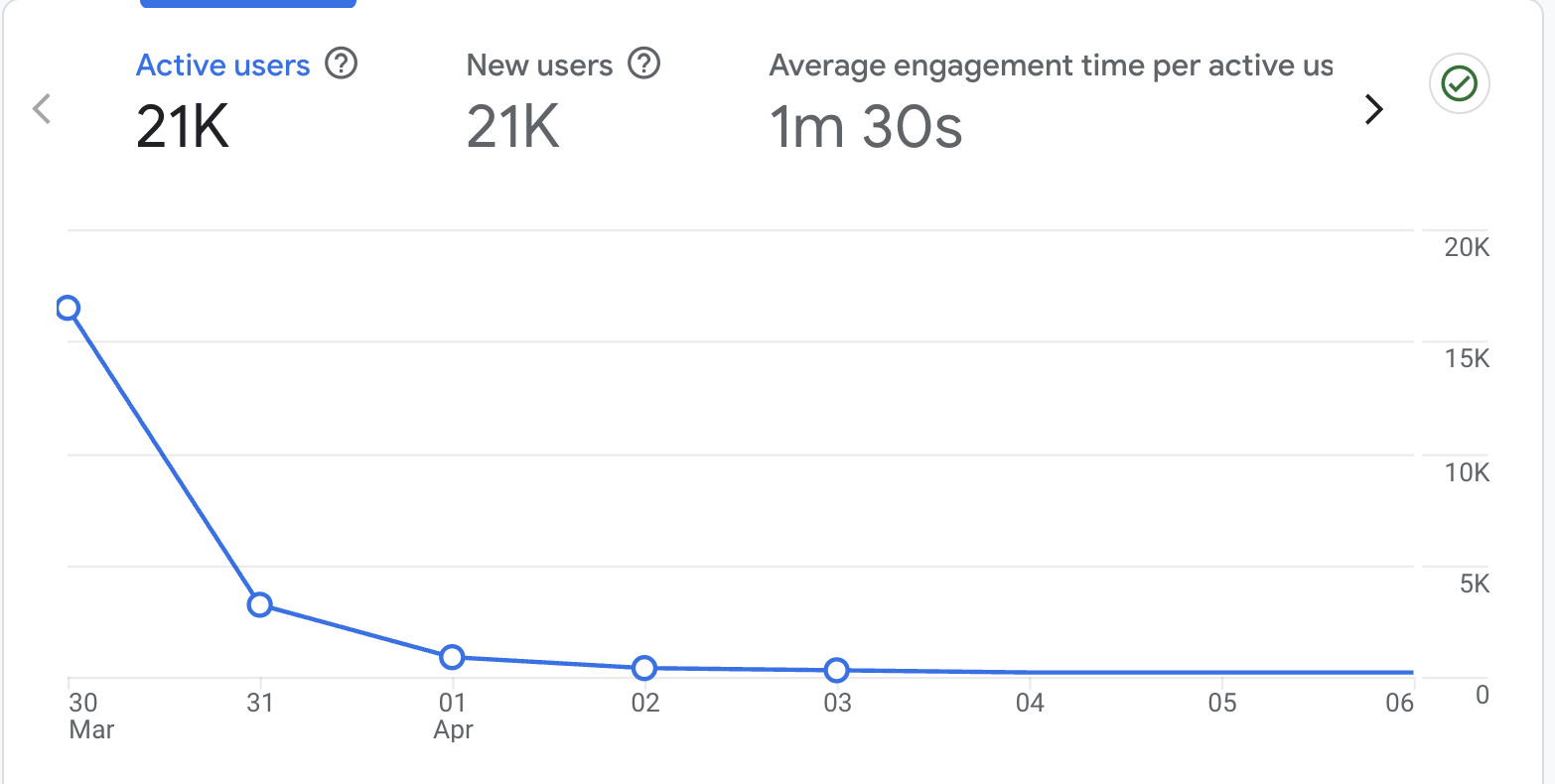
The post ended up with 372 upvotes and 532 comments, was opened by 16K people the day it was released, and very interestingly, by 4K more the rest of the week. My Cloudflare Pages setup for this blog was able to handle this without blinking, which was a huge relief. As soon as it got to the top, Google Analytics showed me 6K people online. Surreal.
Something I didn’t know is that after a post makes it to the homepage, Hacker News drops the nofollow tag, so Google is able to recognize it as a full link. The article also gets mentioned in the front page archive for that day. It was picked up by the Financial Times as a reading list for the day (also with a full link), and also linked in a dozen Hacker News aggregators. It got backlinks from other posts where they mentioned it, a bunch of shares on subreddits. It got shared about a dozen times on Twitter and it was featured in an AI-generated podcast.
The backlinks gave a boost to the Google rankings, this blog was started just 3 months ago after all, but search traffic dropped back to baseline quite quickly. I thought it was going to push Google to index parts of my site that it was ignoring, but so far that didn’t happen.
Given the numbers, it yielded a remarkably low long-term engagement: only 12 people left their email to subscribe to the blog and I got a grand total of 2 new Twitter/X followers.
But some people reached out on LinkedIn, and even people I knew congratulated me on making it to the top without me telling them I was there, I didn’t really think that many people read HN daily. Some people told me they saw the post shared in group chats.
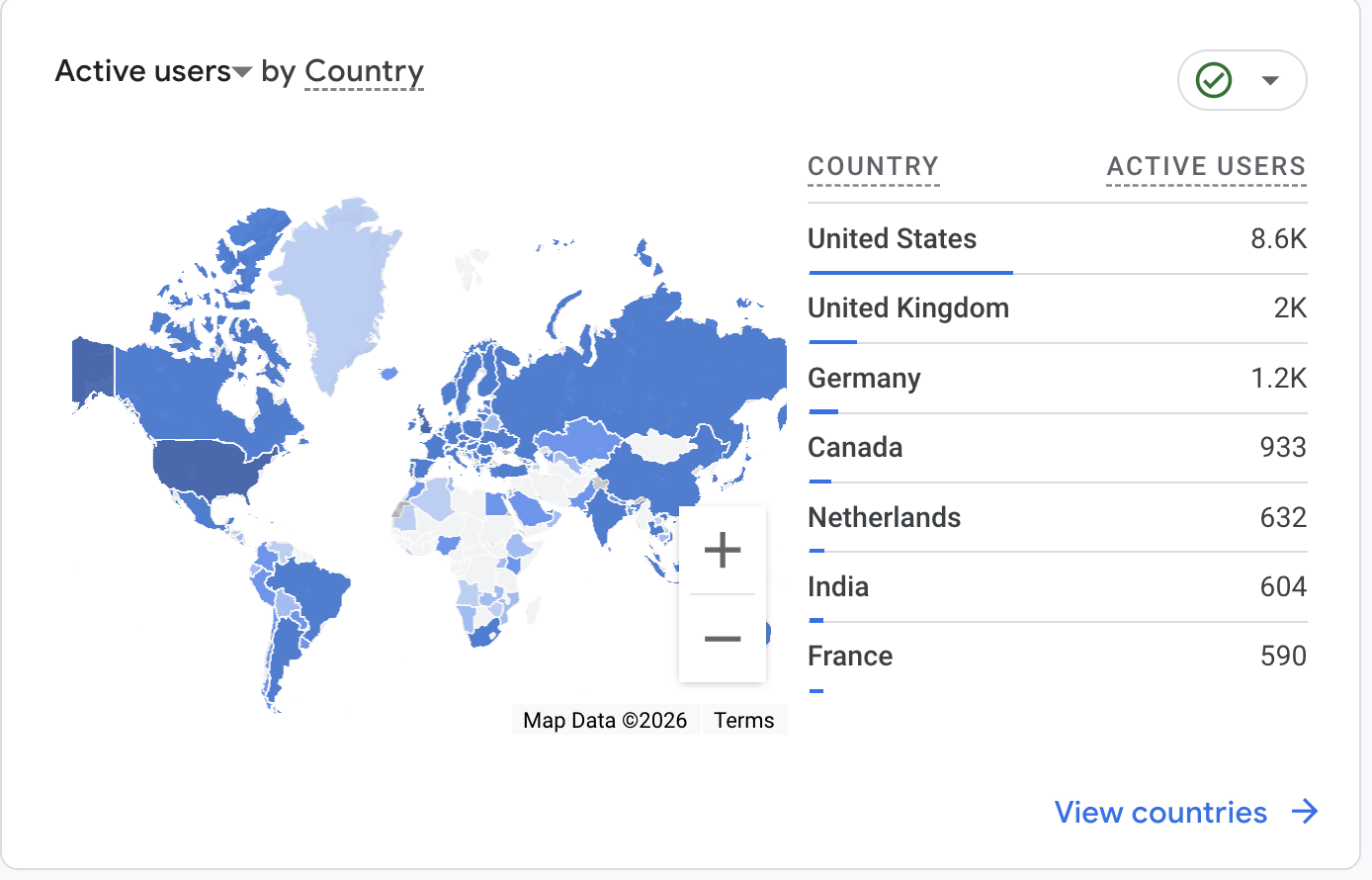
Most of the traffic came from the US, particularly San Francisco as you’d expect. Second came the UK, Germany and Canada. I think the Europe traffic is significant given that it was posted in a more East-Coast/Europe time-friendly (1pm CET). Even then, San Francisco did 3x more views than New York.